Why a yes-or-no wheel is smarter than it looks
A 50/50 wheel sounds like the dumbest tool on the internet. Here's why I think it's one of the most useful, how to ask it a good question, and when to ignore it.
walter2930 3 min read

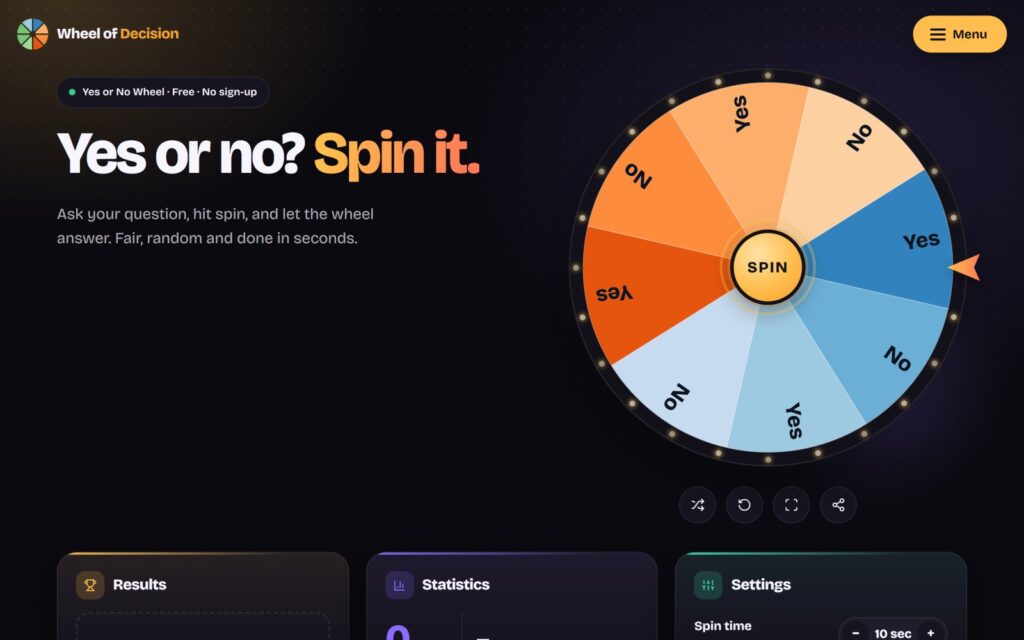
Of all the tools on Wheel of Decision, the Yes or No Wheel looks the least impressive. Eight slices. Four say Yes, four say No. You press spin, it lands on one. A coin could do that.
So why build it? Because I don’t think people reach for a yes-or-no wheel because they want a random answer. I think they want a moment.
The three seconds that matter
A coin flip is over before you’ve had time to feel anything. Up, down, done. A wheel is different. For a few seconds you watch the pointer tick past Yes, No, Yes, No, slowing down, and somewhere in there you catch yourself hoping.
That hope is the useful part. If you’re silently begging for Yes, you’ve just found out what you wanted all along. The wheel can land wherever it likes; you already have your answer.
The wheel doesn’t have to make the decision. It just has to show you that you’ve already made it.
And if you genuinely feel nothing either way? Then it really doesn’t matter, and a fair spin is the quickest way to stop going round in circles. Either outcome is a win.
Why eight slices and not two
People ask this a lot. Two big halves would give exactly the same odds, but they’d make a boring spin: you’d see where it was heading from a mile off. Alternating slices keep the pointer flicking between answers right up to the end, which keeps that moment of suspense alive. Four out of eight is still exactly 50/50.
The Shuffle button moves the slices around for the same reason. It changes how the wheel looks, never the odds.
It’s fair, and it has no memory
Every result comes from your browser’s cryptographically secure random number generator. Each spin is completely independent. Three Nos in a row don’t make a Yes “due”; the next spin is a fresh 50/50, every time. Your history is saved in the Results panel (with total spins and your last answer) so you can look back, but the wheel itself never looks back.
How to ask it a good question
- Make it a real yes-or-no. “Should I order pizza?” works. “What should I eat?” doesn’t; put your options on the main Spinner Wheel instead.
- Decide what the answer means before you spin. In a group, agree that the result stands. Otherwise “best of three” turns into “best of seven”.
- Pick the spin length to suit the mood. Anything from 7 seconds to 2 minutes. Seven for yourself, a long one for a room full of people who need to feel the suspense.
When to ignore it
I’d never tell anyone to let a wheel decide whether to take a job, end a relationship or spend their savings. For those, use it the other way round: spin, notice your reaction, then go and make the decision properly. A Yes or No wheel is brilliant for “pizza tonight?”, “one more episode?” and “do we go to the beach?”, and that’s plenty.
It also can’t do more than two answers. There’s no Maybe, and you can’t rename the slices. That’s deliberate, because the whole point is speed. If you want your own answers, the Spinner Wheel has a Yes or No quick-start you can edit.
Where it shines
Small daily decisions. Breaking a tie when a group vote comes out even. Settling a friendly argument when both sides agree to accept the spin. Party dares. A true-or-false warm-up in class where everyone guesses before the wheel stops. Deciding whether there’s time for one more round.
Next time you’re stuck on something small, give it a spin at wheelofdecision.com/tool/yes-or-no/, and pay attention to what you’re hoping for while it turns.